

Planix Budgeting, forecasting, management accounts, and financial reporting system
Introduction
Organisations typically produce budgets at the end of each financial year. Budgets, acting as financial plans, translate the strategic plan into estimates of income and expenditure for the upcoming year. Departments or smaller units usually create their budgets in Microsoft Excel, which are then consolidated at various organisational levels into a final organisation-wide budget or, in the case of a country, a national budget. The budgeting process is usually characterised by challenges, which we outline below.
Most common pitfalls of preparing budgets using spreadsheets
- Time consumption – Budget preparation starts with the smallest unit in the organisation, such as a section, cost centre, or profit centre. This process requires time as each unit produces its budgets, which then undergo consolidation at various levels and back-and-forth transmission for review and adjustments.
- The challenge of skills – Budgets are often prepared using spreadsheets, and many users have only a basic understanding of Excel, which can result in arithmetic and formula errors when producing and consolidating budgets.
- The challenge of inaccurate budgets – Zero-based budgets require calculating figures by multiplying estimated units by estimated prices, rather than inflating past performance. Often, people opt for the simpler method of inflating past data, which neglects unique factors like business activity, economic conditions, market trends, and climate per budgeting period.
- The challenge of budget documentation – An effective budget should be straightforward to review, with each figure clearly indicating its calculation method. Often, calculations are performed on separate sheets of paper, and the resulting figures are then manually entered into a spreadsheet. This approach complicates the budget review process, as it becomes difficult to trace the origins of the figures.
- The challenge of collaboration – Microsoft Excel is a single – user tool. If more than one person is needed to participate in a spreadsheet-based application, they must be given a copy of the spreadsheet, and then you must wait for them to finish with it before you (or someone else) can continue. This can be painful for any situation where collaboration is required. Although it is possible to send out individual spreadsheets, you are up against the tedious task of consolidating all of these spreadsheets when they come back.
- Data security challenge – Microsoft Excel stores figures directly in cells without separating logic from data and presentation. It lacks password protection and user rights controls, making it vulnerable to manipulation.
- The challenge of what-if analysis – When a budget is produced using a well-designed budgeting model or system, it facilitates management in conducting what-if analysis and making informed decisions by observing the behaviour of the results as they adjust business drivers or variables in the model. This can be more challenging with budgets produced using Microsoft Excel due to varying levels of modelling skills among users.
- Challenge of Budget Monitoring – Monitoring budgets can be tough since it’s often not real-time. Accountants usually analyse variances after spending occurs. A good budgeting system should provide real-time variances, including both price and efficiency variances.
System Overview
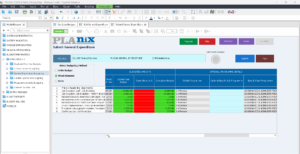
- Planix is a budgeting, forecasting, management accounts and financial reporting system that we introduced in 2015. Since then, it has seen yearly upgrades until the latest version called Planix Skyrocket.
- The software was initially designed to address the challenges of budgeting using spreadsheets that Local Authorities of Zimbabwe were facing. The Planix project was initiated by the Ministry of Local Government of Zimbabwe in conjunction with the UNDP and was funded by UNICEF. Celsoft has since standardised the software to enable its customisation for use by any other organisations, from non-government organisations, public organizations to private organisations.
- In Zimbabwe, Planix is currently being used by many local authorities drawn from both rural and urban councils, including but not limited to the City of Bulawayo, the City of Victoria Falls, the City of Kwekwe, the City of Chitungwiza and the City of Masvingo.
- Planix is a distributed budgeting system that enables users from various sections, cost centres, profit centres or departments to collaborate in the production of the budget, either using their local area network or the internet (Planix Qloud). This is one of the key benefits of using Planix as it helps to save time in the production, review and approval of budgets while ensuring consistency in budget assumptions and drivers.
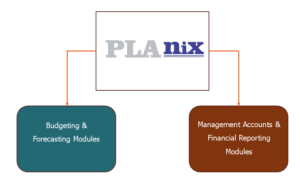
- Planix is not only used for the production of the budget, but it has another addon module for the preparation of monthly, quarterly and annual management accounts and financial reports.
Why Planix – The System Benefits
- The software has been an enabler for easy and proper budgeting, where budgets are derived from units & tariffs, which is an approach that was not in place before the advent of the software. The budget workings ensure that every budget figure can be verified with regard to it’s build up.
- Planix System took away the need for us, Treasurers and Directors of Finance, to go through the pain of creating spreadsheet formulas and linking multiple budgets, thereby improving the efficiency of budget production.
- Analysis – Ability to clearly analyse the impact of the budget by seeing how I am allocating resources to key deliverables or programmes by utilising an analysis dashboard that exists in the software.
- Planix simplifies the implementation of Programme-Based Budgeting, amongst Local Authorities.
- Distributed budgeting is a great initiative as it encourages participation of every line manager in the budget process while introducing transparency as to how and why their budgets may be adjusted downwards or upwards, further contributing to a shared vision.
- Planix can be integrated with any existing Accounting systems.
Distributed Budgeting Architecture
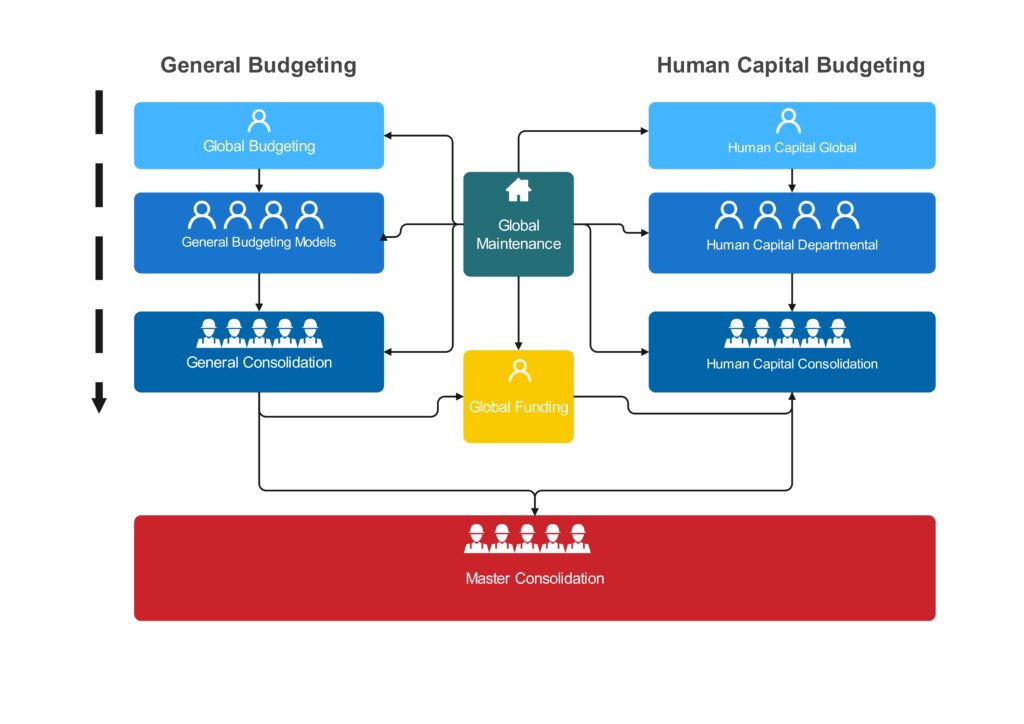
- Planix can connect up to 99,999 users through a network for collaborative budgeting. Users input budgets on modules installed on their computers, and upon submission, data is stored on a central SQL database. The output, comprising consolidated budgets, is generated through three modules: General Consolidation, Human Capital Consolidation, and Master Consolidation. The system also allows unlimited reporting modules to be installed for real-time budget access by departmental heads, directors, or other stakeholders via LAN or cloud server over the internet.
- Budgeting in Planix starts at the “Centre”, with the Chief Budget Officer, who submits key budget assumptions such as prices, tariffs, unit costs, funding, and many more, and pushes them to various sections or departments. Once sections or departments receive the “global” budget parameters, they proceed to enter their quantities in the production of their:
- General Income Budgets,
- General Expenditure Budgets, and
- Capital Expenditure Budgets.
On the other hand, the Human Capital Chief Budget Officer enters “Global” parameters for the Human Capital Budgets, such as salary scales, new benefits, employer contribution rates, and many more, and then “pushes” them to various sections or individuals within the Human Resources department. These individuals or sections will proceed to enter details of the employees working in their various sections of jurisdiction, then click to calculate benefits using Planix’ powerful calculation engine. The results are pushed to the Human Capital consolidation that consolidates all Human Capital Budgets and produces various reports and analyses.
Both the Human Capital results and the General budgets are finally consolidated into summaries in the Master Budget Consolidation Module.
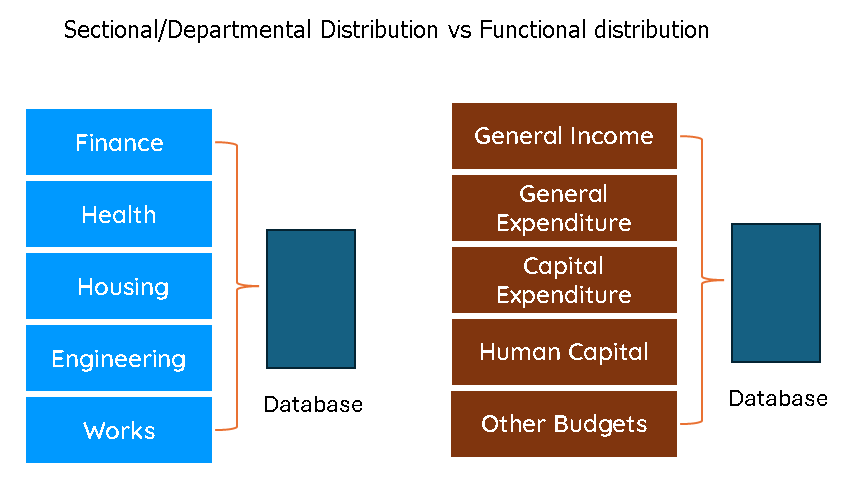
- Budget distribution can be done by section, department, or function. In section or department distribution, users are assigned sections or cost/profit centres to budget for. In functional distribution, users handle specific budgets like General Income or Capital Expenditure for the whole organization or department.
Your Content Goes Here
Your Content Goes Here
Key features of the Planix system
- Automatic and real-time departmental budget consolidation.
- Programme-Based Budgeting (PBB) support.
- Multi-currency budgeting and reporting with exchange rate translation.
- Strong user access controls, audit trails, and data security features.
- Built-in data validation, error detection, and transparency tools.
- High system accuracy through tested calculation engines.
- Flexible configuration and customization options.
- Budget duplication – making a copy of the prior year’s budget for editing.
- Multilayered budgeting lines enable the ease of analysis of the budget, as each figure in the budget is well supported. Budgets are prepared at the subline level, which consolidates into detailed lines, then into major lines.
- Eliminates reliance on error-prone spreadsheet-based budgeting.
- Significantly reduces the time and effort required to prepare, review, and approve budgets.
- Improves accuracy, transparency, and accountability in budget preparation.
- Enhances the participation of departmental managers in the budgeting process.
- Provides clear visibility into resource allocation and programme performance.
- Supports compliance with modern public sector budgeting frameworks, including Programme-Based Budgeting, IPSAs, and the government’s new Chart of Accounts.
- Enables better financial control and informed decision-making through real-time reporting.
- Budget duplication helps make the budget process faster, as the user will only be editing the duplicated budget.
- Global unit prices, which promote uniformity and consistency of prices, as users will be capturing in the budget.
- Budget take-on, which will make budget comparatives easier.
- Budget limits assist in helping departmental users to budget within their limits and avoid unattainable wish lists.
- Multi-currency reporting enables the budget to be reported in either USD or Local currency easily, or any other currency of choice.
- Planix’s consistent smart interface, layout is the same throughout the system, and the meaningful colors throughout the system reduce the learning curve of the users.
- Detailed budget workings that easily show what constitutes the budgeted figures.
- Easy integration with other systems.
- Supplementary budgets can have the original budget and the supplementary budget as well.
- Includes graphical analysis, dashboards, and analytical tools to support informed decision-making.
- 24/7 Support. Our customers can call us anytime for assistance with the software.
Distributed Budgeting
The hallmark of our Planix software is its ability to handle many users working together concurrently to produce the organization’s budgets
Programme-based budgeting
Planix is ideal for public sector budgeting as it helps organizations produce not only traditional line budgets but programme-based budgets too.
Gender-based budgeting
Gender-sensitive budgets are now a key requirement of public sector budgets. Gender budgeting is embedded in Planix from the beginning to the end.





Send us an email or create a support ticket.
Support Email
support@celsoft.net
talk to our agent
We are available 24/7, call us now!
Support Portal
talk to our agent